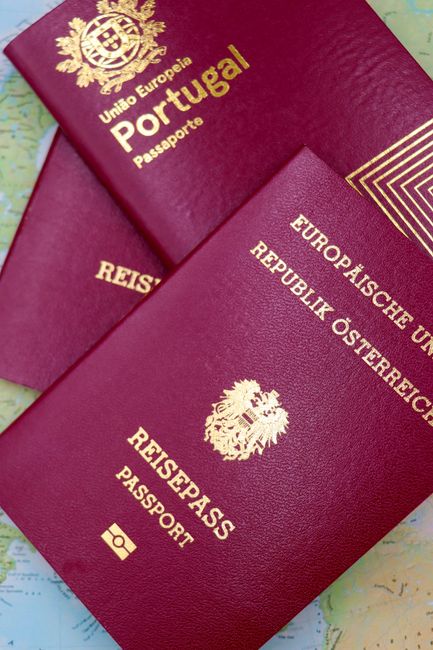
Stuck at Border Control? What Airlines Owe You (and What They Don’t)

Stuck at Border Control? What Airlines Owe You (and What They Don’t)
TL;DR: If you miss a flight because originating immigration or security lines were too long, most airlines consider you a "no-show" and owe you nothing. If you miss a connecting flight on a single ticket due to customs delays, the airline will rebook you for free but is rarely legally required to pay cash compensation.
You stood in line. You watched the clock. You begged the officer to hurry up. It didn't work. The gate is closed, and the plane is pushing back without you.
It’s the nightmare scenario. But before you scream at the gate agent, you need to understand exactly where you stand legally. In 2026, the rules are rigid, but there are loopholes.
The Golden Rule: It depends on your ticket
Airlines treat immigration delays differently depending on how you booked your trip. This is the single biggest factor in whether you pay $0 or $1,000 to get home.
Scenario A: The Connecting Flight (Single Ticket)
You landed in Dallas or London, cleared customs to catch your next leg, and the line took three hours.
The Verdict: You are generally safe.
Because the airline sold you the itinerary as a single contract, they accept responsibility for the "minimum connection time" (MCT) being sufficient. If customs creates a bottleneck:
- Rebooking: They must put you on the next available flight for free.
- Hotels: If you are stuck overnight, airlines often provide a voucher, though policies vary by carrier.
- Compensation: You usually do not get cash compensation (like EU261 or DOT payouts). Immigration delays are considered "extraordinary circumstances" or government actions outside the airline's control.
Scenario B: The Originating Flight (Start of Trip)
You arrived at the airport three hours early, but the security or exit-immigration lines were chaotic. You missed the flight.
The Verdict: You are on your own.
Airlines view getting to the gate as the passenger's sole responsibility. If the government (TSA/CBP) is slow, the airline is not liable. Technically, your ticket loses its value the moment the cabin doors close.
The "Flat Tire" Rule: Your Secret Weapon
If you fall into Scenario B, don't panic yet. Most major carriers (including Delta, United, and American Airlines) have an unwritten policy often called the "Flat Tire Rule."
If you arrive at the airport within two hours of your missed departure, agents have the discretion to rebook you on the next flight as a "standby" passenger for free (or a small fee), rather than making you buy a new full-fare ticket.
How to use it:
- Find a counter agent: Skip the automated kiosks; you need a human.
- Be Politeness-Aggressive: Anger makes agents stick to the "no-show" fee rules. Empathy makes them look for the "Flat Tire" button.
- Say the Magic Words: "I arrived early but was caught in an unprecedented immigration surge. Can you see if the Flat Tire policy applies here?"
When Insurance Saves the Day
This is where travel insurance proves its worth. Standard "Trip Delay" or "Missed Connection" coverage often kicks in where airlines fail.
However, read the fine print. For policies to pay out for missed flights due to security delays, usually require you to prove you arrived at the airport by the recommended time (e.g., 3 hours for international). Keep your parking receipt or Uber log. That timestamp is your evidence.
Next Steps:
- If you are at the airport now: Go to the help desk immediately. Ask to be put on the standby list for the next flight.
- Document everything: Take a photo of the long line or the time on your phone while waiting. It helps with insurance claims later.
- Check your credit card: Premium cards (Chase Sapphire Reserve, Amex Platinum) often have built-in trip delay insurance that covers rebooking costs up to $500/ticket.
Most travelers assume delays are the airline’s problem.
In reality, once it involves immigration or security, it usually becomes yours.
If your itinerary feels a bit tight—or you’re not entirely sure how it would play out in a real-world scenario—it’s worth taking a second look before you book.
Verified Sources
- U.S. Department of Transportation: Fly Rights & Consumer Protections (2025/2026 Edition)
- European Union Law: Air Passenger Rights (EU Regulation 261/2004)
- Montreal Convention: Liability Limits for International Carriage