
Worried your visa might get rejected?
Try our free Visa Chance Checker — see your approval score and exact weaknesses before you submit.
Schengen Visa from India: A Comprehensive Guide
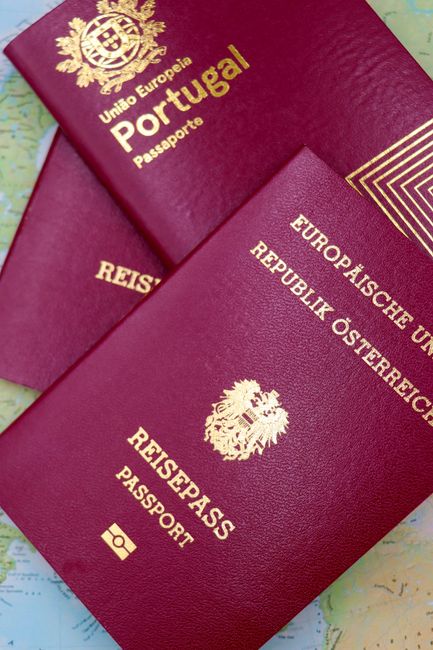
Schengen Visa from India: Requirements, Fees, Processing Time, and What Indian Applicants Should Know in 2026
If you are applying for a Schengen visa from India, the most important thing is not just collecting documents. It is making sure you apply through the right Schengen country, at the right time, with a file that actually makes sense from start to finish.
A Schengen short-stay visa allows travel across the Schengen area for up to 90 days in any 180-day period, and the Schengen area now applies the same short-stay visa rules across 29 countries.
What makes the India route more interesting in 2026 is that the India-specific multiple-entry cascade regime introduced in 2024 is still the key facilitation measure publicly referenced for Indian nationals residing in India, while mission-level handling, appointment access, and practical timelines still vary country by country.
If you have not mapped the bigger document flow yet, start with our Schengen Visa Requirements guide first so your purpose of travel, financial proof, insurance, and itinerary all support the same story.
Who Can Apply for a Schengen Visa in India?
Indian nationals can apply for a Schengen visa in India. Foreign nationals can also apply in India if they are legally residing in India. If someone does not reside in India, they may only apply there if they are legally present and can justify why the application is being lodged in India rather than in their country of residence. Germany’s official India FAQ states this clearly.
That point matters because many generic articles make it sound as if simply being in India is enough. It is not always enough. Residence status still matters.
Which Embassy or Consulate Should You Apply Through?
You do not choose the embassy based on convenience.
The correct application point is:
The Country That Is Your Only Destination
The Country Where You Will Spend The Most Time
If There Is No Main Destination, The Country Of First Entry
This is one of the biggest areas of confusion for Indian applicants planning multi-country trips.
For example, if your itinerary includes 2 nights in Amsterdam and 5 nights in Berlin, you should normally apply through Germany, since it is your main destination based on the longest stay. If both stays are equal in length, the correct application point is usually the country of first entry.
If your route still feels unclear, our Travel Itinerary for Schengen Visa guide is the most useful next read because your itinerary has to support the same embassy logic.
When Should You Apply from India?
The legal baseline is still the familiar one: Schengen visa applications can generally be lodged up to 6 months before travel and should normally be submitted at least 15 days before departure.
But that is only the formal minimum.
In practice, missions in India often encourage applicants to move earlier:
Germany currently warns of longer waiting times for appointments and longer visa processing times, and says the application may take time to reach the consulate after submission through VFS.
Germany’s India checklists also state that applications are usually processed within 15 working days from the day of arrival at the visa section, and VFS forwarding can take extra time.
Netherlands Worldwide says applications from India can be submitted up to 6 months in advance, and its India application page routes applicants through VFS centres.
So the practical rule is simple: do not build your plan around the minimum timing. If you are applying from India, earlier is safer.
Where Do You Actually Submit the Application in India?
There is no single “Schengen visa office for India.”
The appointment system depends on the Schengen country you are applying to. Many Member States use VFS Global in India, but the exact appointment provider, city availability, and jurisdiction rules still depend on the mission. For example:
the Netherlands currently accepts applications through VFS centres in multiple Indian cities including Ahmedabad, Bengaluru, Chandigarh, Chennai, Cochin, Hyderabad, Jalandhar, Kolkata, Lucknow, Mumbai, Pune, and New Delhi.
Germany also processes Schengen applications through VFS in India and currently notes centralized short-stay visa processing in Mumbai, with flexibility to submit in VFS centres across India regardless of place of residence.
That is why copying a “one-size-fits-all India process” from a random blog is risky.
What Documents Do You Usually Need?
The exact checklist depends on the country and your travel purpose, but the broad structure is consistent.
Most applicants applying from India will need:
A Valid Passport
A Completed And Signed Schengen Visa Application Form
A Recent Visa Photo
Travel Medical Insurance
Proof Of Accommodation
Proof Of Financial Means
Proof Of Legal Residence In India
Proof Of Social Or Economic Ties
Documents Supporting The Purpose Of Travel
Your passport normally must:
be issued within the last 10 years
be valid for at least 3 months after departure
have at least 2 blank visa pages.
For travel medical insurance, the common India guidance still requires coverage of at least EUR 30,000 for emergency medical care, hospitalization, and repatriation. The exact accepted insurers and wording can vary by mission.
If you are still fixing the photo side, review our Schengen Visa Photo Requirements and use the Free Passport Photo Converter before the appointment. That is one of the easiest places to avoid preventable mistakes.
What Indian Applicants Often Get Wrong
This is where many applications become weaker than they need to be.
1. They focus on the checklist, but not on consistency
A file can be technically complete and still look weak if:
the dates do not match
the itinerary looks rushed
the financial story feels unclear
the purpose of travel is not properly supported
That is why your route, hotel bookings, insurance, and financial proof should all point in the same direction.
2. They underestimate proof of ties
The mission still needs to understand why you are likely to return to India after the trip.
For applicants in India, official checklists may ask for documents such as:
employment contract
employer leave approval
payslips
ITR acknowledgements
business registration
student proof
pension proof
business bank statements, depending on the profile.
3. They assume a booked flight speeds up the case
It does not.
Germany’s India checklist explicitly says that a booked flight ticket does not result in preferred processing of the application.
So the better question is not “Should I book early to get faster approval?”
It is: “Does my route look realistic and does the file hold together?”
Fees, Biometrics, and Processing Time in 2026
As of the current India consular fee listing effective 1 April 2026, the Schengen visa fee is:
EUR 90 / INR 9,790 for adults
EUR 45 / INR 4,890 for children aged 6 to 11
free for children under 6.
Biometrics remain a core part of the application process. In most cases, applicants in India must appear in person to provide fingerprints and a digital photo, although fingerprints from an earlier Schengen application can often be reused for up to five years. Official India guidance also notes that children under 12 are generally exempt from fingerprinting.
For processing time, the official Schengen baseline is still around 15 days, but in India the practical timeline often depends on:
appointment wait time
VFS forwarding time
public holidays
additional document requests
the mission’s current workload.
The India-Specific Multiple-Entry Advantage Still Matters in 2026
This is still one of the most useful differences for Indian applicants.
The EU’s India-specific cascade regime, announced in April 2024 and still publicly referenced in current mission guidance, allows Indian nationals residing in India to move toward longer-validity multiple-entry Schengen visas if they build a lawful travel history. Under this regime, applicants who have obtained and lawfully used two Schengen visas within the previous three years can be issued a 2-year multiple-entry visa, which can normally be followed by a 5-year multiple-entry visa if passport validity allows.
But this still needs careful wording: it is not automatic and not an entitlement. Germany’s India FAQ says applicants do not have an entitlement to a longer-validity visa. The mission still assesses the individual case.
So if you are a first-time applicant, the smarter focus is still a clean first approval, not chasing a long-validity visa too early.
FAQ
Can I apply for a Schengen visa in India if I am not an Indian citizen?
Yes, if you are legally residing in India. If you do not reside in India, you may only apply there if you are legally present and can justify why the application is being lodged in India.
How early should I apply for a Schengen visa from India?
Officially, applications are usually allowed up to 6 months before travel and should be filed no later than 15 days before departure. In practice, if you are applying from India, earlier is safer because appointment delays and forwarding time can add pressure.
Is the Schengen visa fee in India different in 2026?
Yes, current India consular listings show the adult fee at EUR 90 / INR 9,790 and the child fee at EUR 45 / INR 4,890 as of 1 April 2026.
Do I need a confirmed flight ticket before I apply?
Not always. Some checklists allow a reservation or travel plan, and Germany’s mission explicitly notes that a booked flight does not speed up processing. What matters more is that your route and documents are coherent.
Can Indian applicants get long-term multiple-entry Schengen visas more easily now?
Yes, qualifying Indian nationals residing in India can benefit from the India-specific cascade regime for 2-year and then 5-year multiple-entry visas, but it is still assessed case by case.
Need Help Before You Submit?
If your case is straightforward, a careful review of the official checklist may already be enough.
But if your profile is more detailed self-employment, sponsorship, mixed-purpose travel, multi-country route, or repeat-travel strategy under the new cascade Visa Concierge can help you review the file, spot weak points, and prepare a cleaner application before submission. It does not guarantee approval, but it can help reduce avoidable mistakes in the part of the process where most applicants lose time.
Sources
European Commission — Visa Policy Overview
Germany in India — Schengen Visa FAQ
EEAS — Common Information Sheet for Schengen Visa Applicants in India
Netherlands Worldwide — Checklist: Applying for a Schengen Visa in India for Tourism
VFS Global Germany India — Apply for a Visa / Common Information / FAQ
Netherlands Worldwide — Consular Fees in India
Netherlands Worldwide — Applying for a Schengen Visa for the Netherlands in India
EEAS — More Favourable Schengen Visa Rules for Indians

