
Vizenizin reddedilmesinden mi endişeleniyorsunuz?
Ücretsiz Vize Şansı Denetleyicimizi deneyin — başvurmadan önce onay puanınızı ve tam olarak hangi noktaların zayıf olduğunu görün.
B1/B2 Visa Interview Questions: What Officers May Ask And How To Answer Clearly
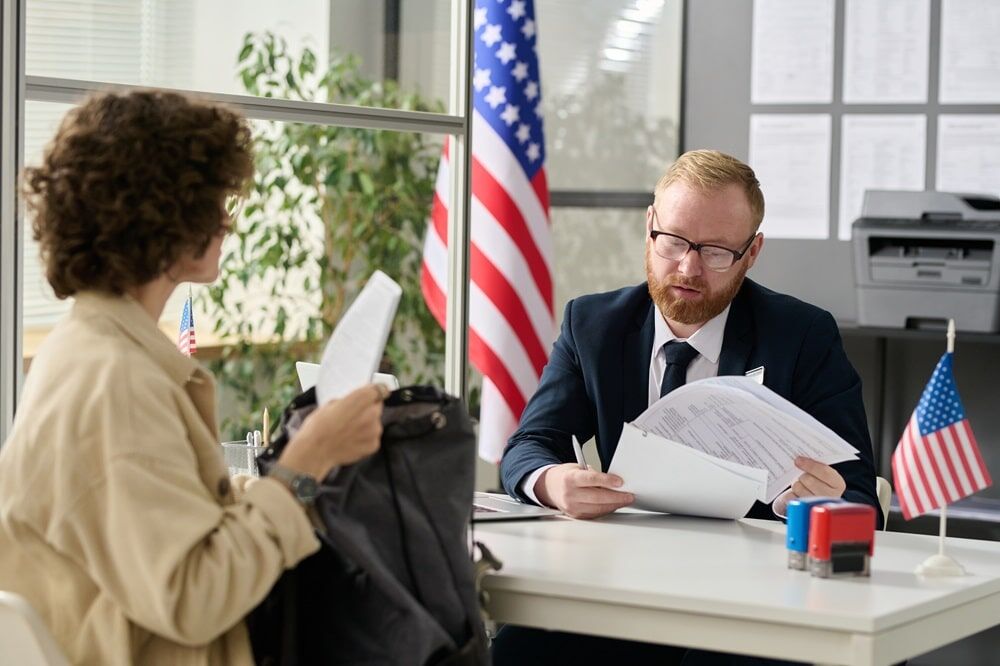
B1/B2 Visa Interview Questions: What Officers May Ask And How To Answer Clearly
A B1/B2 visa interview is usually short, but your answers need to be clear, truthful, and consistent with your DS-160 form. The officer may ask about your travel purpose, trip length, finances, job or business, family, previous travel, and reason to return home.
Many B1/B2 visa interviews are relatively brief and can sometimes take only around 5 minutes. There is no official U.S. Department of State rule that says every interview must take a certain amount of time, and the duration can vary depending on the applicant’s profile, the embassy or consulate, previous visa history, security checks, and the complexity of the case.
Because interviews are often short, applicants should be prepared to explain their situation clearly and efficiently. The goal is not to memorize perfect answers. The goal is to explain your real situation simply, with answers that match your DS-160 and supporting documents.
This guide covers common B1/B2 visa interview questions, what the officer may be checking, and how to answer without over-explaining.
What Is A B1/B2 Visa?
A B1/B2 visa is a U.S. visitor visa.
According to the U.S. Department of State, a visitor visa is a nonimmigrant visa for people who want to enter the United States temporarily for business under B1, tourism under B2, or a combination of both purposes under B1/B2.
Common B1 purposes include:
Business meetings
Conferences or conventions
Consulting with business associates
Negotiating a contract
Common B2 purposes include:
Tourism
Vacation
Visiting family or friends
Medical treatment
Short recreational courses, not for academic credit
A B1/B2 visa is not for working, studying for a degree, paid performance, journalism work, crewmember activity, or permanent residence in the United States.
What Is The Officer Checking In A B1/B2 Visa Interview?
The officer is not only checking whether you want to visit the United States.
They are usually checking whether:
Your travel purpose matches B1/B2 rules
Your trip is temporary
Your DS-160 answers are accurate
Your answers are consistent
Your finances support the trip
Your job, business, school, family, or other ties support your reason to return
Your previous travel or visa history is clear
You qualify for the visa category you applied for
The U.S. Department of State says consular officers use the information in the DS-160, combined with a personal interview, to determine an applicant’s eligibility for a nonimmigrant visa.
Before The Interview: Check Your DS-160 First
Before preparing answers, review your DS-160.
Your interview answers should match what you submitted.
Check:
Travel purpose
U.S. address or hotel details
Intended arrival date
Trip length
Person or company paying for the trip
Employment or business details
Previous U.S. travel
Previous visa refusals
Family information
Travel companions
Contact person in the U.S.
The Department of State says applicants should answer all DS-160 questions accurately and completely; otherwise, they may need to correct the application and reschedule the interview.
Common B1/B2 Visa Interview Questions
Below are common question types. The exact questions can vary by embassy, applicant profile, visa type, and officer.
1. Questions About Your Travel Purpose
These questions check why you want to visit the United States.
Possible Question | What The Officer May Be Checking | How To Answer Clearly |
|---|---|---|
Why are you going to the United States? | Whether your purpose matches B1/B2 | Give a direct purpose: tourism, family visit, business meeting, conference, or medical visit |
What will you do in the U.S.? | Whether your activities are allowed under B1/B2 | Mention specific plans, not vague ideas |
Why do you need to go now? | Whether the timing makes sense | Explain the event, holiday, meeting, family visit, or travel window |
Is this for business or tourism? | Whether B1, B2, or both applies | Be clear if it is business, tourism, or a combined trip |
Are you planning to work in the U.S.? | Whether you intend to do prohibited activity | Answer honestly. B1/B2 does not allow U.S. employment |
Example answer style:
“I am going to the U.S. for a two-week holiday in New York and Washington, D.C. I plan to visit museums, meet a friend for two days, and return to work after my approved leave.”
Do not say:
“I just want to see what happens there,” or “Maybe I will find opportunities.”
That can make your purpose unclear.
2. Questions About Your Itinerary
These questions check whether your trip is realistic.
Possible Question | What The Officer May Be Checking | How To Answer Clearly |
|---|---|---|
How long will you stay? | Whether the trip length is reasonable | Give exact or realistic dates |
Which cities will you visit? | Whether your plan is clear | Mention the main cities only |
Where will you stay? | Whether accommodation is arranged or logical | Mention hotel, family home, or host address |
Who are you traveling with? | Whether your travel group is clear | Explain if alone, family, friends, or business group |
Have you booked flights? | Whether your plan is real but not overcommitted | Explain your plan carefully; do not invent bookings |
Example answer style:
“I plan to stay for 12 days. I will spend 7 days in Los Angeles and 5 days in San Francisco. I will stay at hotels near the city centre.”
If you are visiting family:
“I will stay with my sister in Houston for 10 days. I included her address in my DS-160.”
3. Questions About Financial Proof
These questions check whether you can afford the trip.
Possible Question | What The Officer May Be Checking | How To Answer Clearly |
|---|---|---|
Who is paying for your trip? | Whether funds are clear | Say whether you, your employer, parent, spouse, or sponsor is paying |
What is your monthly income? | Whether income supports the trip | Answer based on real income |
How much will the trip cost? | Whether the trip is realistic | Give a reasonable estimate |
Do you have bank statements? | Whether financial proof is available | Say yes if you brought them, but answer the question first |
Why is someone else paying for you? | Whether sponsor support makes sense | Explain relationship and reason clearly |
Example answer style:
“I am paying for the trip myself from my salary and savings. My estimated trip cost is around $2,500, including flights, hotels, and daily expenses.”
For a sponsor:
“My father is paying for the trip because this is a family holiday. He is employed as [role], and I brought his bank statement and employment proof.”
Avoid saying only:
“My sponsor will handle everything.”
That does not explain the relationship, reason, or financial ability.
4. Questions About Your Job Or Business
These questions check your current situation outside the U.S.
Possible Question | What The Officer May Be Checking | How To Answer Clearly |
|---|---|---|
What do you do for work? | Whether your employment is clear | Mention your role, company, and how long you have worked there |
How long have you been employed? | Whether your job is stable | Answer directly |
Did your employer approve your leave? | Whether you are expected to return | Say yes if approved and mention return date |
What business do you own? | Whether your business is real and active | Explain simply: business type, clients, income source |
Who will manage your work while you travel? | Whether the trip is temporary | Explain leave coverage or business arrangement |
Example answer style:
“I work as a marketing executive at [company]. I have worked there for three years. My leave is approved from 5 to 18 August, and I return to work on 19 August.”
For business owners:
“I run a small export business. My team will handle operations while I am away, and I will return for scheduled client work after the trip.”
5. Questions About Family And Home Ties
These questions check whether your life outside the U.S. is clear.
Possible Question | What The Officer May Be Checking | How To Answer Clearly |
|---|---|---|
Are you married? | Family ties | Answer directly. If yes, mention your spouse stays in your home country if relevant. |
Do you have children? | Family responsibilities | Answer honestly and briefly. If your children are staying home, mention who they live with while you travel. |
Who lives with you? | Home situation | Explain your household simply, such as living with parents, spouse, children, or alone. |
Do you own property? | Long-term commitments | Answer yes or no. If yes, mention the type of property without over-explaining. |
Why will you return after the trip? | Temporary intent | Give a clear reason such as your job, business, school, family, approved leave, or commitments at home. |
Example answer style:
“I will return because my job is here, my approved leave ends on 18 August, and my family lives here.”
Do not over-explain or sound defensive. A short, factual answer is better.
6. Questions About Previous Travel
These questions check your travel history and whether you followed past visa rules.
Possible Question | What The Officer May Be Checking | How To Answer Clearly |
|---|---|---|
Have you traveled abroad before? | Travel history | Answer yes or no. If yes, mention a few countries you visited and that you returned on time. |
Have you been to the U.S. before? | Previous U.S. travel | Answer directly. If yes, mention when you visited and whether you followed the allowed stay. |
Have you ever overstayed a visa? | Immigration compliance | Answer honestly. If no, say you have always followed the allowed stay. |
Which countries have you visited? | Past travel record | Mention the main countries briefly. You do not need to list every trip unless asked. |
Have you had any visa refusals? | Visa history honesty | Answer honestly. If yes, mention the country and year, then explain what has changed if relevant. |
Example answer style:
“I have traveled to Singapore and Japan, and I returned within the allowed stay each time.”
If you have no travel history:
“This will be my first long-distance international trip. I have prepared a short itinerary and my leave is approved.”
A blank passport is not automatically a problem, but your trip purpose and return plan should be clear.
7. Questions About Previous Visa Refusals
If you were refused before, answer honestly.
Possible Question | What The Officer May Be Checking | How To Answer Clearly |
|---|---|---|
Have you ever been refused a U.S. visa? | Honesty and visa history | Say yes if true |
When were you refused? | Timeline | Give the month/year if you remember |
What has changed since then? | Whether your new application is stronger | Explain real changes only |
Did you disclose the refusal in your DS-160? | Consistency | Your DS-160 should match the truth |
Example answer style:
“Yes, I was refused in 2024. Since then, my situation has changed. I now have stable employment, approved leave, and clearer travel plans.”
Do not hide a previous refusal if the form asks about it.
8. B1 Business Visa Interview Questions
If your trip is for business, the officer may ask:
What is the purpose of your business trip?
Which company are you visiting?
What is your role in the meeting?
Who invited you?
Who is paying for the trip?
How long will the meeting or conference last?
Will you receive payment from a U.S. company?
What will you do after the meeting ends?
Why can’t this meeting be done online?
What is your job outside the U.S.?
Answer clearly with your business purpose.
Example answer style:
“I am attending a three-day industry conference in Chicago. My employer is paying for the trip. I will return after the event because I have scheduled work meetings back home the following week.”
Do not describe the trip as “work in the U.S.” if you are only attending meetings or a conference. Be precise.
9. B2 Tourism Or Family Visit Interview Questions
If your trip is for tourism or visiting someone, the officer may ask:
Why do you want to visit the U.S.?
Which cities will you visit?
Who will you visit?
How do you know this person?
Where will you stay?
How long will you stay?
Who is paying for the trip?
What do you do in your home country?
Why will you return?
Have you traveled before?
Example answer style:
“I am visiting my aunt in California for 10 days and will also spend a few days sightseeing in Los Angeles. I will return because my leave ends on 15 July and I go back to work on 16 July.”
How To Answer B1/B2 Visa Interview Questions Clearly
A good answer is usually:
Honest
Short
Specific
Consistent with your DS-160
Supported by your documents
Focused on the question asked
Use this simple structure:
Answer the question directly
Add one useful detail
Stop unless the officer asks more
Example:
Question: “Why are you going to the U.S.?”
Weak answer:
“I just want to travel and maybe explore some opportunities.”
Clearer answer:
“I am going for a 10-day holiday in New York. I plan to visit museums, see a Broadway show, and return to work after my approved leave.”
What Documents Should You Bring To A B1/B2 Interview?
The U.S. Department of State lists required documents such as a passport, DS-160 confirmation page, application fee payment receipt if required, and photo if the upload fails. It also says applicants must complete the DS-160 and print the confirmation page to bring to the interview.
Depending on your situation, you may also bring supporting documents such as:
Employment letter
Approved leave letter
Payslips
Bank statements
Tax documents
Business registration
Invitation letter
Conference registration
Travel itinerary
Hotel booking
Family relationship proof
Sponsor documents
Previous passports
Previous visa refusal letter, if relevant
Supporting documents are helpful, but they do not replace clear answers.
U.S. Travel Docs notes that supporting documents are only one of many factors a consular officer considers, and each case is examined individually.
Common B1/B2 Visa Interview Mistakes
Memorizing Answers
Do not sound like you are reading from a script.
Prepare your facts, but answer naturally.
Giving Long Answers
Long answers can create confusion.
Answer the question first, then add details only if needed.
Saying Your Purpose Is Unclear
Avoid vague answers like:
“I want to explore opportunities”
“I might stay longer”
“I will see what happens”
“My friend will arrange everything”
Giving Different Answers From Your DS-160
Your interview answers should match your DS-160.
If your DS-160 says tourism, but your interview sounds like work or study, that can create concern.
Overloading Documents Without Knowing Your Case
Documents can support your story, but you should understand your own application clearly.
Do not bring documents you cannot explain.
Hiding Previous Refusals
If you were refused before, answer honestly.
A previous refusal does not always mean you cannot apply again, but hiding it can create a bigger issue.
What If You Are Refused After A B1/B2 Interview?
If your B1/B2 visa is refused, read the refusal notice carefully.
The U.S. Department of State says a visa application may be denied if the consular officer does not have enough information to determine eligibility, if the applicant does not qualify for the visa category, or if the applicant falls under an ineligibility ground.
Common refusal codes include:
Refusal Code | What It Usually Means |
|---|---|
214(b) | The officer was not satisfied that you qualified for the visa category or temporary stay |
221(g) | The officer needs more information, documents, or administrative processing |
212(a) | There may be a legal inadmissibility issue |
Do not reapply with the same unclear answers and documents.
Review what may have been weak:
Travel purpose
Trip length
Financial proof
Sponsor support
Job or business ties
Family ties
DS-160 consistency
Previous refusal explanation
Where Outbound Can Help
Outbound can help you review your visa profile before your B1/B2 visa interview.
Start with Outbound’s Free Visa Chance Checker to check areas that may affect your application, such as:
Travel purpose
Financial proof
Sponsor details
Travel history
Previous refusals
Home ties
Document consistency
After the quiz, you can see your score and possible weak areas.
Where available, Visa Prep can help you move from quiz result to document readiness by helping you upload documents, flag possible issues, and prepare clearer next steps before your appointment.
Outbound does not guarantee visa approval and does not replace official U.S. Embassy or Consulate instructions. It helps you prepare your profile and documents more clearly before you apply.
FAQ
What Questions Are Asked In A B1/B2 Visa Interview?
Common questions include why you are going to the U.S., how long you will stay, who is paying for the trip, what you do for work, where you will stay, who you are visiting, and why you will return home.
How Should I Answer B1/B2 Visa Interview Questions?
Answer truthfully, briefly, and clearly. Your answers should match your DS-160 and documents. Do not memorize long scripts.
What Is The Officer Checking In A B1/B2 Interview?
The officer may check your travel purpose, visa category, finances, job or business situation, family ties, travel history, previous refusals, and whether your visit appears temporary.
Can I Get A B1/B2 Visa With No Travel History?
Yes, it is possible, but your application should still be clear. Focus on your travel purpose, financial ability, itinerary, employment or study status, and reason to return.
What Should I Bring To A B1/B2 Visa Interview?
Bring required documents such as your passport, DS-160 confirmation page, appointment letter, fee receipt if required, and photo if needed. You may also bring supporting documents related to work, funds, travel plans, sponsor support, and home ties.
Should I Give Long Answers During The Interview?
No. Answer the question directly and add only useful details. Long answers can make your case harder to follow.
What If I Was Previously Refused A U.S. Visa?
Answer honestly if asked or if the DS-160 asks about previous refusals. Be ready to explain what has changed since the refusal.
Can Outbound Help Me Prepare For A B1/B2 Interview?
Outbound can help you check your visa profile through the Free Visa Chance Checker. Where available, Visa Prep can help you review document readiness, flag possible issues, and prepare clearer next steps before your appointment.
Before Your B1/B2 Visa Interview
Before your interview, ask yourself:
Is my travel purpose clear?
Does my DS-160 match my real plan?
Can I explain who is paying for the trip?
Can I explain why I will return home?
Do my documents support my answers?
Did I answer previous visa refusal questions honestly?
Do I know my trip dates, city plan, and accommodation?
Am I applying at the correct embassy or consulate for my residence or nationality?
A B1/B2 interview does not require perfect speech. It requires clear, truthful, and consistent answers.
Sources
U.S. Department of State — Visitor Visa
https://travel.state.gov/content/travel/en/us-visas/tourism-visit/visitor.htmlU.S. Department of State — DS-160 Online Nonimmigrant Visa Application
https://travel.state.gov/content/travel/en/us-visas/visa-information-resources/forms/ds-160-online-nonimmigrant-visa-application.htmlU.S. Department of State — DS-160 Frequently Asked Questions
https://travel.state.gov/content/travel/en/us-visas/visa-information-resources/forms/ds-160-online-nonimmigrant-visa-application/ds-160-faqs.htmlU.S. Department of State — Visa Denials
https://travel.state.gov/content/travel/en/us-visas/visa-information-resources/visa-denials.htmlU.S. Department of State — Interview Waiver Update
https://travel.state.gov/content/travel/en/News/visas-news/interview-waiver-update-july-25-2025.htmlU.S. Department of State — Nonimmigrant Visa Applicants In Country Of Residence
https://travel.state.gov/content/travel/en/News/visas-news/adjudicating-niv-applicants-in-their-country-of-residence.htmlU.S. Travel Docs — Business/Tourist Visa
https://www.ustraveldocs.com/th/th-niv-typeb1b2.aspOutbound Visa — Free Visa Chance Checker
https://www.outboundvisa.com/en/visa-chance-checkerOutbound Visa — Free Visa Tools
https://www.outboundvisa.com/en/free-tools
